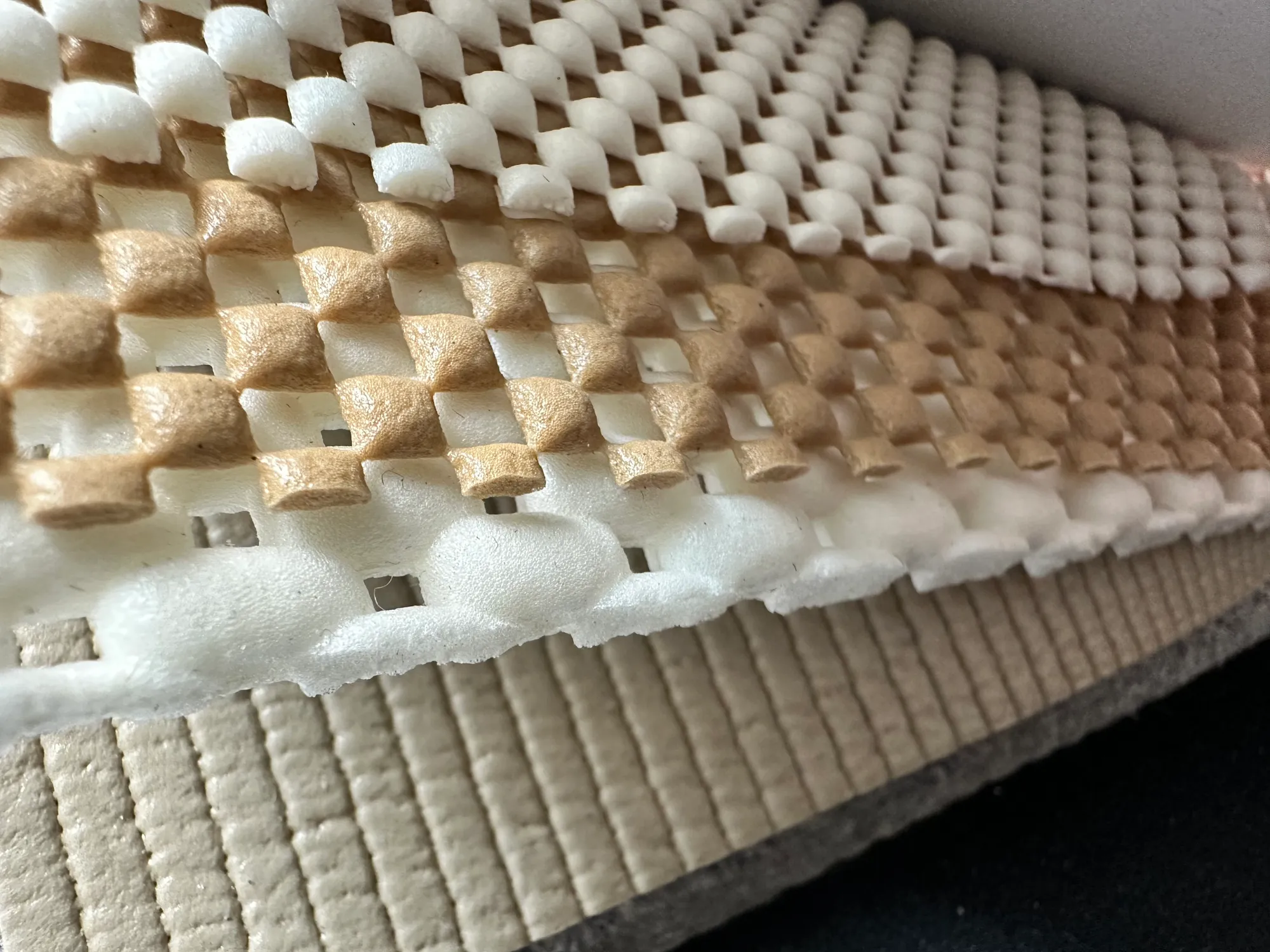
Why a rug pad matters
A rug pad does four things: prevents slipping, absorbs impact to extend rug life, protects the floor underneath, and stabilises the rug’s position. Skipping the pad seems like a small economy and produces expensive problems — slipped rugs that curl and crease, pile that wears three times faster, and hardwood scratched by the rug foundation rubbing against the finish.
The four pad types
- Natural rubber. The gold standard for grip on hardwood, tile, and stone. Grips without adhesive, does not react with polyurethane finishes, lasts 7–10 years. Thin profile. Our default recommendation for rugs on hard floors.
- Felt (no rubber). Thick, soft, absorbing. Ideal as a cushioning layer under a rug on hardwood where slipping is not an issue (large room-size rugs fully loaded with furniture). Does not grip on its own.
- Felt-and-rubber hybrid. Combines the cushioning of felt with the grip of natural rubber. Our most-recommended pad for any rug on hardwood or tile where both grip and cushion matter. Premium construction runs 3/8” thick.
- Memory foam / synthetic. Cheap, widely sold, and the source of most pad-damage problems on hardwood. Synthetic adhesive backings off-gas and discolour polyurethane finishes. Avoid.
What destroys hardwood finishes
Three pad failure modes cause permanent damage to polyurethane or oil-finish hardwood:
- Adhesive-backed pads. The adhesive reacts with the finish and leaves a haze, a yellow stain, or a sticky residue that will not come off without refinishing.
- PVC and plasticiser migration. Cheap vinyl pads release plasticisers into the finish over time. The discolouration appears gradually and becomes irreversible.
- Trapped moisture. Solid-plastic pads with no airflow trap humidity between the floor and the pad. In a rug pad that does not breathe, this produces a haze on hardwood within a few years.
Natural rubber avoids all three — it breathes, it does not off-gas, and it grips without adhesive.
Sizing — the one-inch rule
A pad should be approximately one inch smaller than the rug on all four sides. That keeps the pad invisible at the edge while supporting the entire walking surface. Pads that extend to the rug’s edge show under foot and catch on passing feet. Pads much smaller than that allow the rug’s edges to flop and curl.
Our rug padding service includes custom cutting to the exact size of your rug. Pads are available from $45 depending on rug size and pad construction.
Chicago-specific considerations
Chicago hardwood takes a beating from the seasonal humidity swing — 60–80% in summer, 20–30% in winter. A pad that breathes is more important here than it is in a climate with stable humidity. Solid synthetic pads trap moisture during summer and concentrate drying stress during winter, both of which accelerate finish wear under the rug. Natural rubber and felt-rubber hybrids breathe through their structure.
For rugs that sit in high-traffic areas year-round, padding is particularly important — we discuss traffic and wear patterns in how often to clean area rugs.
When to replace
Four signs the pad needs replacement:
- Hardened or crumbling rubber on the underside
- Loss of grip (the rug slides more than it used to)
- Visible compression or flattening under heavy furniture
- Discolouration transferring to the floor when the rug is lifted
When we clean a rug for an existing client, we inspect the pad at pickup and recommend replacement if any of these signs are present. Pad and cleaning can be combined into a single service call.